“planting for the first time” search results (4000)
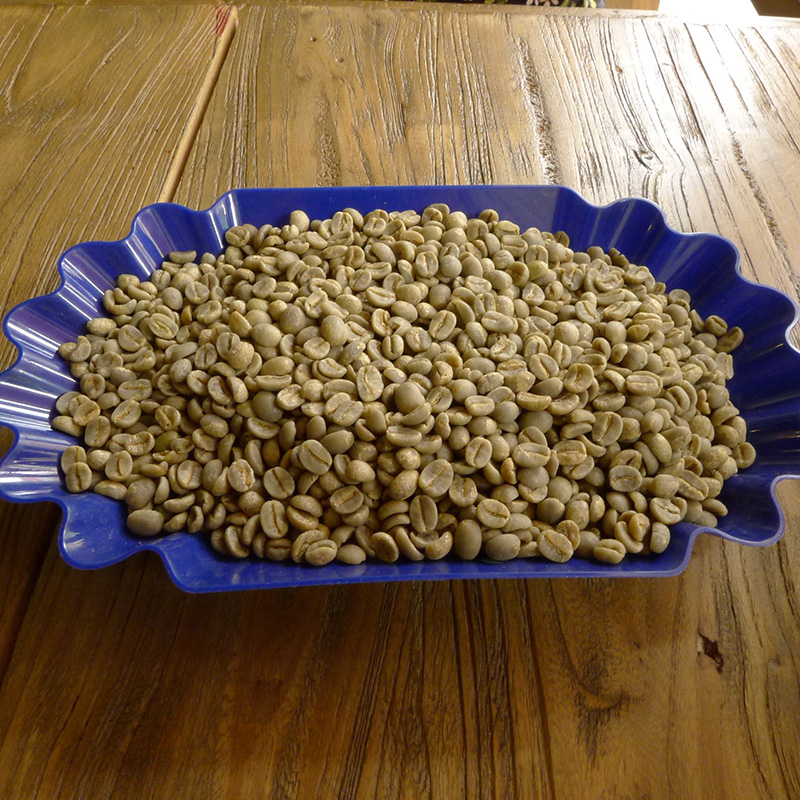
What are washed beans? Costa Rica Tara Pearl Diamond Villa washing SHB Kaddura seed beans
Costa Rican coffee plants were imported from Cuba in 1779 and exported for the first time in 1820. There are now about 32000 coffee farmers, with an average of less than 10000 yuan per farmer. Costa Rica has a population of 410 million (2006), an active coffee planting area of 82500 square meters, an annual output of 1.7 million bags (60kgs per bag), and an annual consumption of 38 million bags in China.
2016-04-14 What washing Costa Rica Tara Pearl Diamond Stone Hill Manor SHB Dula
History of introduction and expansion of Coffee in China in the early stage of Coffee Development (1)
1. The introduction of Ruili Jingpo Nongxian Coffee was recorded in 1914. In April 1996, it was compiled by the compilation Committee of Ruili City Chronicles of Yunnan Province. The fifth coffee section on page 383 of Ruili City Chronicles published by Sichuan Dictionary Publishing House recorded that as early as 1914, the Jingpo people have been introduced from Myanmar to Nongxian Township for cultivation. Yunnan Provincial Chronicles, Volume 39, Chapter 3 of the Local Series of the people's Republic of China
2015-03-09 China Coffee Development course early introduction expansion about Ruili Jingpeng
History of Coffee Tree planting
In China, according to historical records, coffee trees were planted in Taiwan for the first time in 1884, and coffee cultivation in mainland China began in Yunnan. In 1902, a French missionary named Tian introduced seeds from Yingong, Binchuan County, Yunnan Province. it was successfully planted in a place called Zhu Kula, a tributary of the Jinsha River. The commercial cultivation of coffee in Yunnan began in 1985.
2014-09-02 Coffee culture coffee tree planting coffee tree development history
Common Coffee Diseases and pests in Coffee cultivation and Control methods
It is distributed in all coffee producing areas in the world, and it also occurs in Yunnan, Guangxi and Hainan Island in China. It is one of the major pests of coffee. Coffee longicorn beetles, which damage the coffee trunk by larvae for more than 2 years, initially eat between the cambium and xylem, and then eat (1) pest control. 1. Coffee tiger longicorn beetles are distributed in all coffee producing areas in the world. Yunnan, Guangxi and Hainan, China
2015-02-16 Coffee common sense planting common diseases and insect pests prevention and control methods
The History and present situation of Coffee cultivation in China
History of Coffee cultivation in the World Coffee originated in the tropics of northern and central Africa. It has been cultivated for more than 2000 years, and the Arabs began to plant it in 525 BC. At first, coffee beans were only used for chewing. In 890 AD, Arab merchants brought coffee to Yemen and made it into a drink for the first time. By the 13th century, Arabs had become in the habit of stir-frying coffee, but to
2015-02-16 Boutique coffee planting China cultivation history status quo
Coffee History Chronicle the time when the coffee fruit was found in Ethiopia
Coffee fruit was found in Ethiopia in the 6th and 7th centuries; Rhazes, a famous doctor in the Arab region in the 10th century, was considered to be the first person in history to record coffee in the literature; 1100 yuan, the first recorded coffee trees were planted in the Arabian Peninsula, after roasting and cooking, coffee was called Gahwa, meaning Islamic wine; in the 13th century, people
2015-10-20 Coffee History chronology reality Ethiopia Discovery time AD 7th Century
Arabica coffee cultivation techniques Multi-stem shaping and cultivation of coffee trees
Multi-stem integer Multi-stem integer is an integer method that uses the first branch as the main result branch. The purpose of integer is to cultivate multiple trunks and grow a large number of robust first-order branches. Multi-trunk trees do not pick the top. As a result, when the yield decreases after 3 to 5 years, new trunks are replaced.① Cultivation of multi-stem method oblique planting method: When planting, the seedlings are obliquely planted, generally at an angle of 30~60 degrees with the ground. oblique planting can inhibit
2015-02-16 Arabica coffee cultivation techniques multi-stem shaping cultivation utilization one
History and present situation of Coffee production
History of World Coffee production Coffee originated in the tropics of northern and central Africa. It has been cultivated for more than 2000 years, and the Arabs began to plant it in 525 BC. At first, coffee beans were only used for chewing. In 890 AD, Arab merchants brought coffee to Yemen and made it into a drink for the first time. By the 13th century, Arabs had become in the habit of stir-frying coffee, but to
2014-09-05 Coffee knowledge coffee production coffee status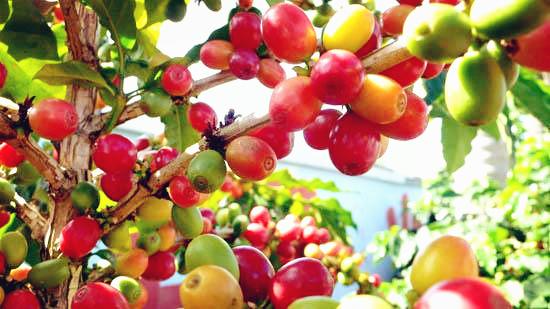
China Coffee Network recommends Costa Rica's Tarazu Diamond Villa Park to wash SHB Kaddura American Cafe.
Costa Rican coffee plants were imported from Cuba in 1779 and exported for the first time in 1820. There are now about 32000 coffee farmers, with an average of less than 10000 yuan per farmer. Costa Rica has a population of 410 million (2006), an active coffee planting area of 82500 square meters, an annual output of 1.7 million bags (60kgs per bag), and an annual consumption of 38 million bags in China.
2016-03-30 China Coffee recommendation Costa Rica Tara Pearl Diamond Stone Mountain Manor Water washing
Costa Rican coffee flavor Central and South American coffee characteristics Tara Pearl Diamond Villa washing SHB card
Costa Rican coffee plants were imported from Cuba in 1779 and exported for the first time in 1820. There are now about 32000 coffee farmers, with an average of less than 10000 yuan per farmer. Costa Rica has a population of 410 million (2006), an active coffee planting area of 82500 square meters, an annual output of 1.7 million bags (60kgs per bag), and an annual consumption of 38 million bags in China.
2016-04-15 Costa Rica Coffee Flavor Central and South America characteristics Tara Pearl Diamond Stone Mountain Zhuang
Costa Rican coffee flavor Central and South American coffee characteristics Tara Pearl Diamond Villa washing SHB card
Costa Rican coffee plants were imported from Cuba in 1779 and exported for the first time in 1820. There are now about 32000 coffee farmers, with an average of less than 10000 yuan per farmer. Costa Rica has a population of 410 million (2006), an active coffee planting area of 82500 square meters, an annual output of 1.7 million bags (60kgs per bag), and an annual consumption of 38 million bags in China.
2016-04-15 Costa Rica Coffee Flavor Central and South America characteristics Tara Pearl Diamond Stone Mountain Zhuang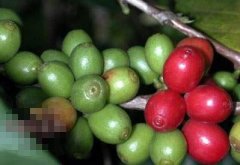
Planting and cultivation of Coffee
1. Seed propagation (1) seed collection, seed washing and seed storage during the full ripening period of coffee (the full ripening period of medium-grain coffee in Hainan Island is from February to March, and that of small seed is from September to November). The fully ripe fruits are picked from strong and high-yielding mother trees to make seeds. After the fruit is harvested, immediately peel and wash the seeds, the method is to put the fruit on the hard and rough ground, use a brick to grind the peel, or you can use a peeling machine
2014-06-16 Coffee knowledge coffee cultivation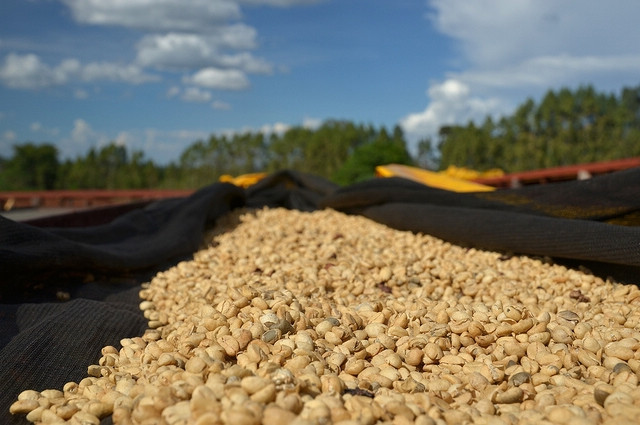
The coffee network recommends that Costa Rica's Tara Pearl Diamond Villa wash SHB Kaddura boutique coffee beans.
Costa Rican coffee plants were imported from Cuba in 1779 and exported for the first time in 1820. There are now about 32000 coffee farmers, with an average of less than 10000 yuan per farmer. Costa Rica has a population of 410 million (2006), an active coffee planting area of 82500 square meters, an annual output of 1.7 million bags (60kgs per bag), and an annual consumption of 38 million bags in China.
2016-03-26 Coffee recommendation Costa Rica Tara Pearl Diamond Stone Hill Manor Water washing SHB
On the planting and picking of coffee trees
One of the characteristics of a coffee tree is that its fruit can bear fruit several times a year, and another is that flowers and fruits coexist at different stages of ripening. If the fruit is too ripe, the beans in it will rot. If the beans are not ripe, the beans will not ripen by themselves. So bean pickers often go through the same tree several times to find ripe fruit, but try their best.
2014-08-08 Coffee knowledge coffee trees planting and picking
Plant coffee trees correctly
One of the characteristics of a coffee tree is that its fruit can bear fruit several times a year, and another is that flowers and fruits coexist at different stages of ripening.
2014-06-17 Coffee knowledge planting coffee trees coffee encyclopedia
History and present situation of Coffee cultivation in China
History of Coffee cultivation in the World Coffee originated in the tropics of northern and central Africa. It has been cultivated for more than 2000 years, and the Arabs began to plant it in 525 BC. At first, coffee beans were only used for chewing. In 890 AD, Arab merchants brought coffee to Yemen and made it into a drink for the first time. By the 13th century, Arabs had become in the habit of stir-frying coffee, but to
2015-10-07 China Coffee cultivation History present situation World
When is the first peak period for the development of coffee planting industry in China?
By the end of the 1940s, according to recorded figures, there were 2173.33 hectares of rubber plantations on Hainan Island, with a total of 867600 rubber trees, with an annual output of 199,000 tons of dry rubber, more than 300,000 coffee plants and an annual output of 1 ton of coffee beans. According to a survey in the early 1950s, a large number of coffee was left in Fushan area of Chengmai County, with a total of 70,000 plants, including more than 40,000 plants in Daji Village and Fushan Farm (Hongguang Farm) 1
2015-02-07 China coffee planting industry development the first peak period when the 1940s
Yunnan Coffee urgently needs to extend the Industrial chain
After nearly 60 years of development, Yunnan Province has become the largest coffee bean production and export base in the country. although it is still in the initial stage, the planting area has broken through the 1 million mu mark for the first time, which indicates that Yunnan coffee industry has made a solid step forward.
2014-07-14 Coffee news Yunnan coffee coffee industry
The basics of coffee
The optimal planting conditions for coffee trees are: a warm climate with a temperature between 15-25 ℃, and annual rainfall of 1500-2000 mm. At the same time, the rainfall time should be in line with the flowering cycle of coffee trees. Of course, in addition to the coordination of seasons and rainfall, there should be fertile soil. The most suitable soil for growing coffee is well drained and contains fire.
2014-08-13 Coffee knowledge Coffee Basics Coffee Encyclopedia
Introduction to the flowering and planting environment of Yunnan Hongguang coffee tree and the cost of planting beans
Coffee fruit contains two seeds, namely coffee beans. The two beans are connected face to face with each other on one side of the plane. Each coffee bean has a thin outer film, which is called silver skin, and its outer layer is covered with a yellow outer skin, called endocarp. The whole coffee bean is wrapped in a sticky pulp to form coffee pulp, which is soft and sweet.
2016-10-21 Yunnan Hongguang coffee what month flowering planting environment cost introduction